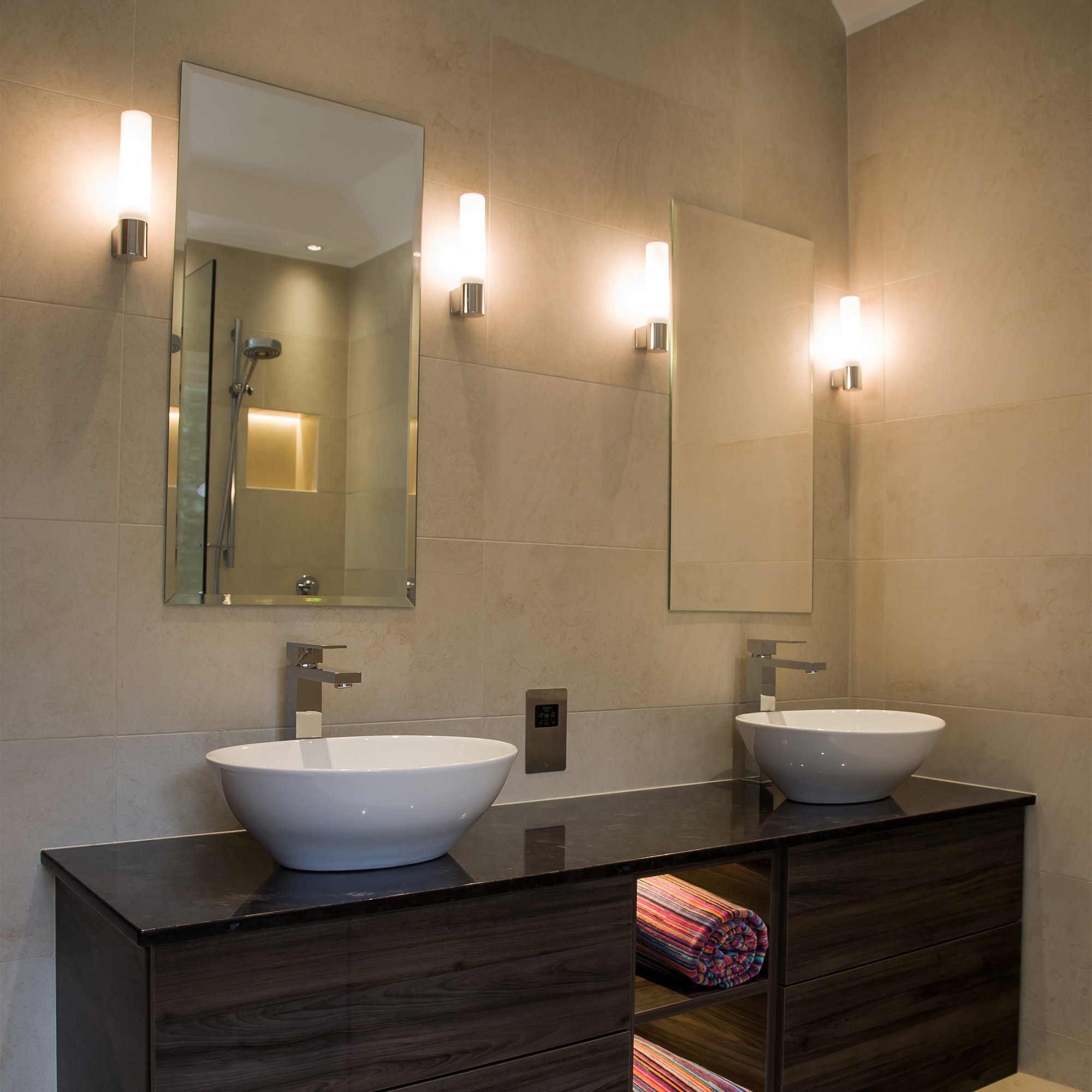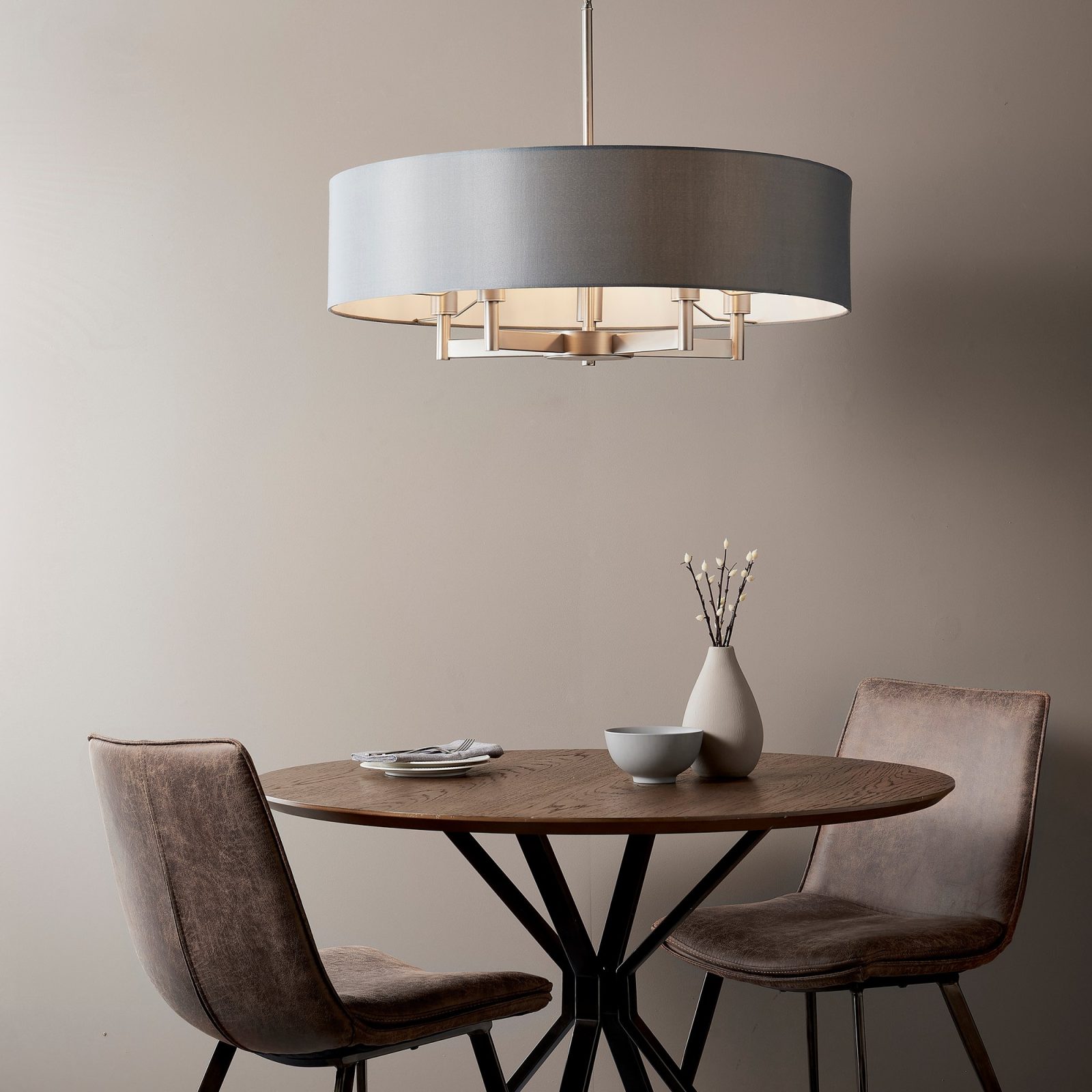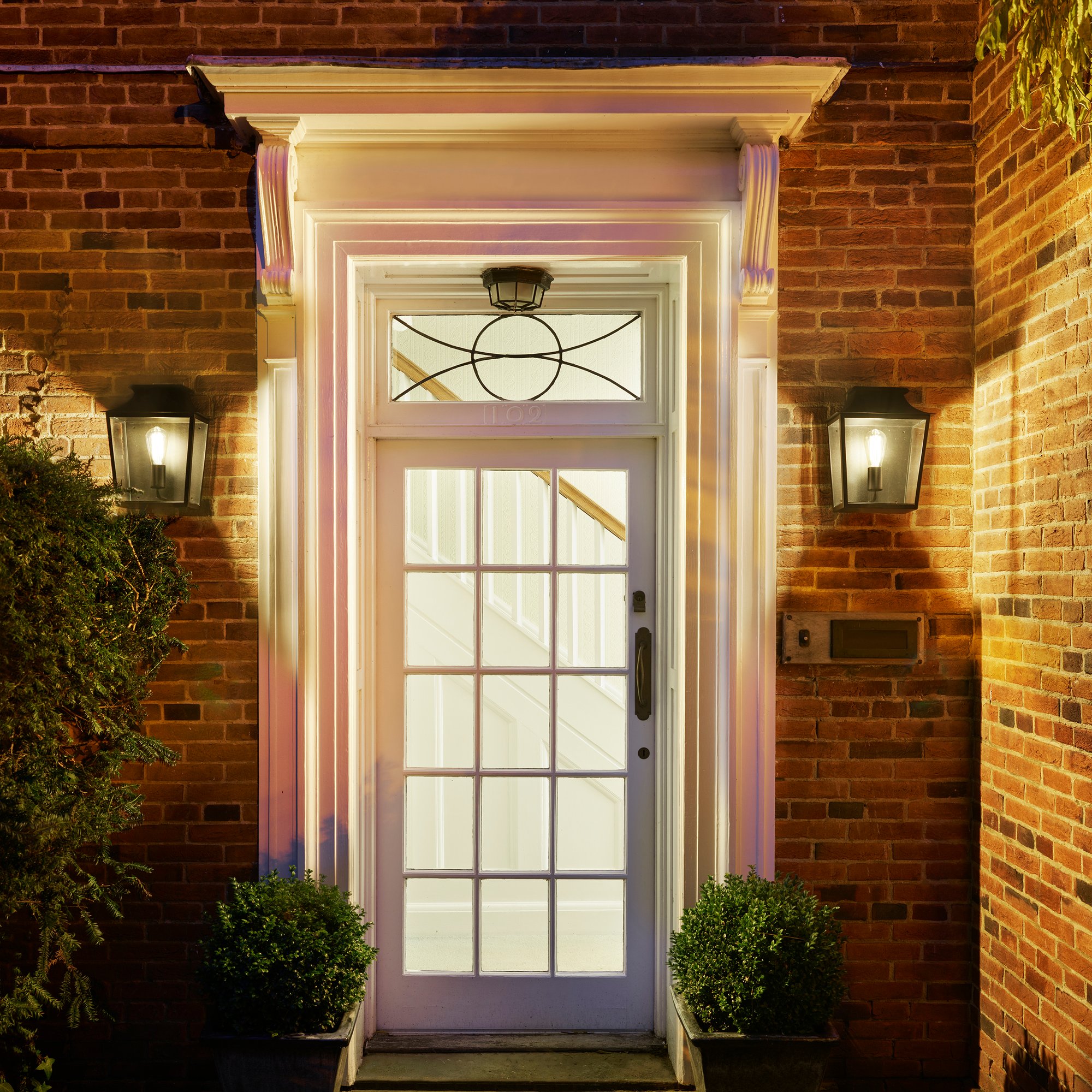
Lumens tell you how bright a light is. Get them right and a room feels comfortable; get them wrong and it feels gloomy or harsh. Here's how to work out what you need.
How Many Lumens Is a 60W Bulb?
About 800 lumens. Watts measure how much power a bulb uses, not how bright it is. LED bulbs use far less power than old bulbs, so look at the lumens (lm) on the box instead.
Scroll sideways to see the whole table.
| Old bulb | Roughly equivalent LED |
|---|---|
| 25W | about 250lm |
| 40W | about 470lm |
| 60W | about 800lm |
| 100W | about 1,500lm |
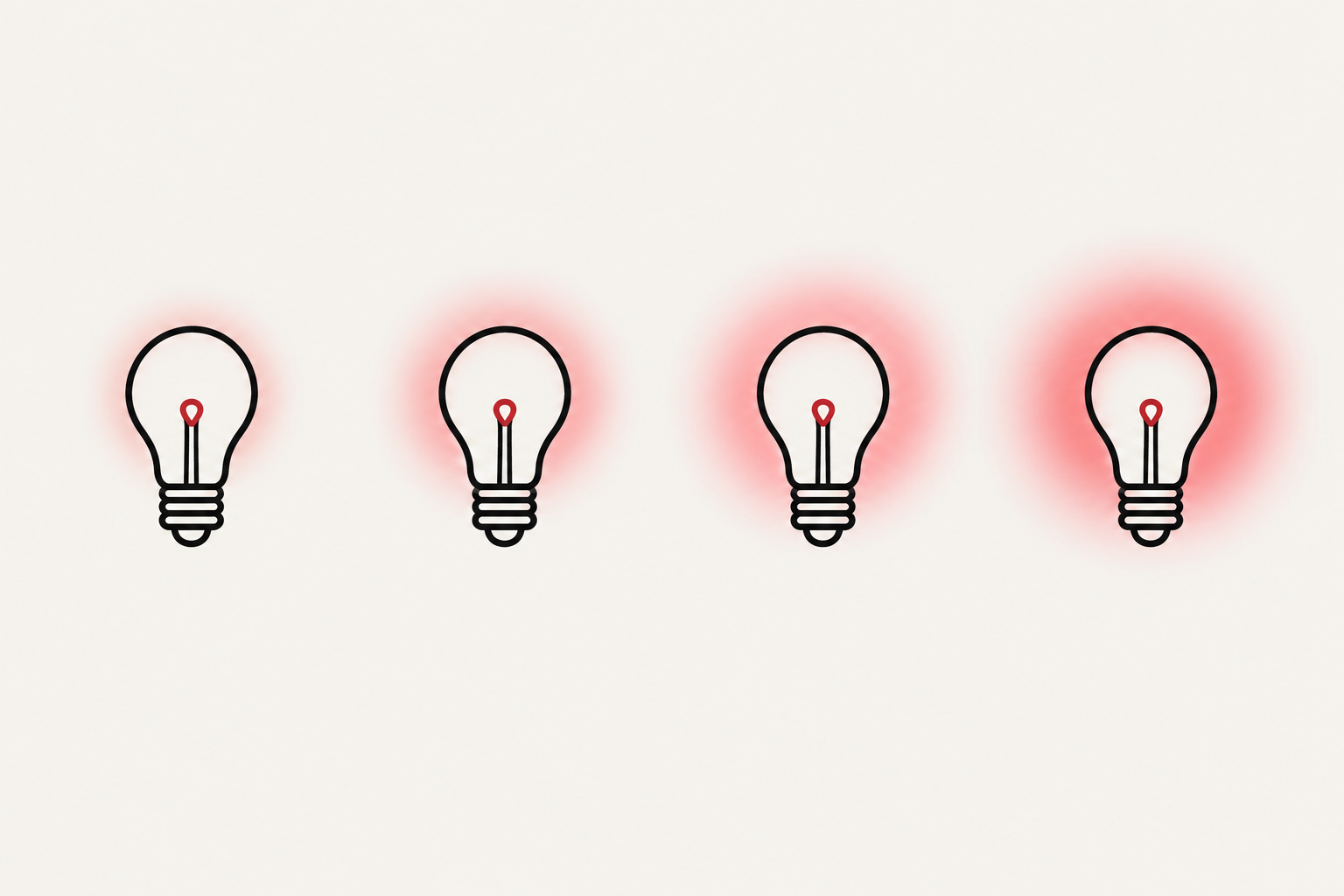
- 25W: 250lm
- 40W: 470lm
- 60W: 800lm
- 100W: 1,500lm
How Many Lumens Do I Need for My Room?
Multiply the floor area in square metres by the figure for the room in the table below: the answer is roughly how many lumens you need from all the lights in the room together.
- Measure the room and multiply the length by the width to get the floor area in square metres.
- Multiply that by the figure for the room in the table below.
- The result is roughly how many lumens you need from all the lights in the room together.
Scroll sideways to see the whole table.
| Room | Lumens per square metre |
|---|---|
| Living room | 150 to 300 |
| Bedroom | 100 to 200 |
| Dining room | 200 to 350 |
| Hallway and landing | 100 to 150 |
| Kitchen | 300 to 400 |
| Bathroom | 300 to 400 |
| Home office | 300 to 500 |
Example: a living room 4m by 5m is 20 square metres. At 150 to 300 lumens per square metre, you'd want about 3,000 to 6,000 lumens across the ceiling light, lamps and wall lights together.
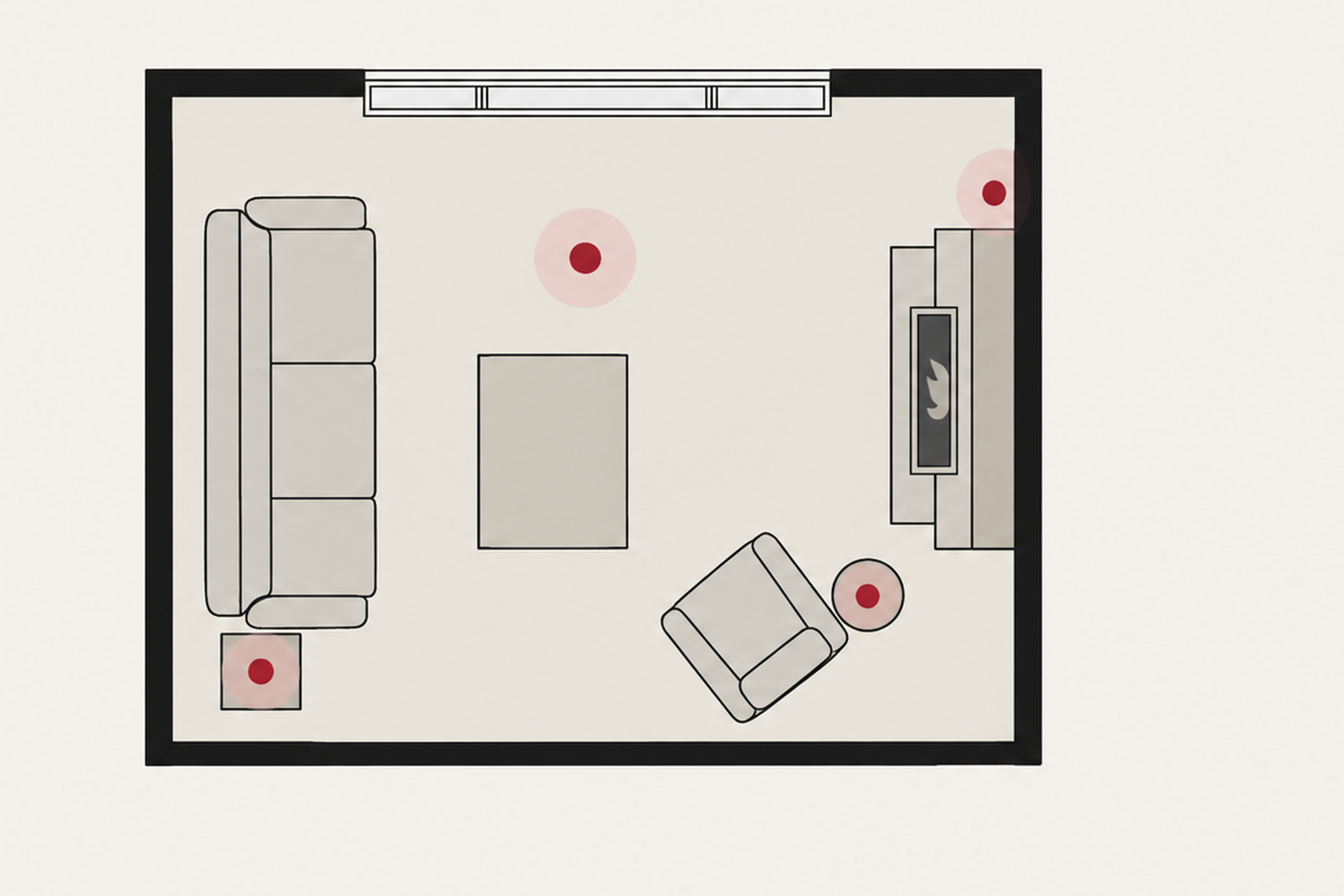
- 5m
- 4m
- 20 square metres
Or look it up. Find your room size and read across to the room. The figures use the middle of each room's range, rounded to the nearest 100 lumens.
Scroll sideways to see the whole table.
| Room size | Hallway | Bedroom | Living room | Dining room | Kitchen or bathroom | Home office |
|---|---|---|---|---|---|---|
| 2m x 3m (6 sq m) | 800 | 900 | 1,400 | 1,600 | 2,100 | 2,400 |
| 3m x 3m (9 sq m) | 1,100 | 1,400 | 2,000 | 2,500 | 3,200 | 3,600 |
| 3m x 4m (12 sq m) | 1,500 | 1,800 | 2,700 | 3,300 | 4,200 | 4,800 |
| 4m x 4m (16 sq m) | 2,000 | 2,400 | 3,600 | 4,400 | 5,600 | 6,400 |
| 4m x 5m (20 sq m) | 2,500 | 3,000 | 4,500 | 5,500 | 7,000 | 8,000 |
| 5m x 5m (25 sq m) | 3,100 | 3,800 | 5,600 | 6,900 | 8,800 | 10,000 |
| 5m x 6m (30 sq m) | 3,800 | 4,500 | 6,800 | 8,200 | 10,500 | 12,000 |
| 6m x 6m (36 sq m) | 4,500 | 5,400 | 8,100 | 9,900 | 12,600 | 14,400 |
How Many Downlights Do I Need?
Divide the lumens the room needs by the lumens of one downlight, and round up. A 3m by 4m kitchen needs about 4,200 lumens, so with 500-lumen downlights that is nine.
Scroll sideways to see the whole table.
| Kitchen or bathroom | 400lm downlights | 500lm downlights | 650lm downlights |
|---|---|---|---|
| 2m x 3m | 6 | 5 | 4 |
| 3m x 3m | 8 | 7 | 5 |
| 3m x 4m | 11 | 9 | 7 |
| 4m x 4m | 14 | 12 | 9 |
| 4m x 5m | 18 | 14 | 11 |
This assumes the downlights are the room's main light. If you also have pendants, under-cabinet lights or lamps, take their lumens off first. Downlights send light straight down, so space them evenly and put the brightest over the worktop or the basin, not the middle of the floor. Switching the worktop ones separately gives you bright light for cooking and softer light the rest of the time.
Work It Out
Lumens and Downlights Calculator
Leave the downlight figure empty if you are not using downlights.
You need about from all the lights in the room together
That is about of lumens if they are the main light
Floor area times the figure for the room. Take off the lumens of any lamps or pendants you will also have.
Spread the Light
The total matters less than where the light comes from. A room lit by one bright ceiling light feels flat; the same lumens split between a ceiling light, a couple of lamps and a wall light feels warmer and more useful. Our guide to the three layers of light explains how.
Add brighter task light where you need it: over a kitchen worktop, beside a reading chair or at a bathroom mirror.
What If I Can't Decide How Bright to Go?
Choose the brighter option and fit a dimmer. If you're between two sizes, choose the brighter option and fit a dimmer. You can always turn a light down, but you can't turn it up. Check the bulbs are dimmable first; our dimmers guide explains which work together.
Warm or Cool?
Lumens tell you how much light; colour temperature tells you what it feels like. Our warm white or cool white guide explains the difference.
Need a Hand?
Call our lighting team on 0113 2818 343 with the size of your room and we'll help you work it out.